
What Tools Are Used for Logging?
Logging, Rigging & Load Handling Guide
A practical guide to the logging chokers, winch lines, blocks, shackles, hooks, and load securement gear used by forestry crews, arborists, land-clearing contractors, and timber professionals.
Logging work depends on more than heavy machinery. Whether a crew is skidding timber, redirecting a line, securing logs for transport, or replacing worn field hardware, the right rigging and load-handling equipment helps keep the job controlled, efficient, and safer.
For professional loggers, arborists, forestry crews, land-clearing teams, and procurement buyers, the most important logging tools are usually the ones that connect, pull, redirect, and secure the load. That includes logging chokers, winch lines, logging blocks, forestry shackles, hooks, and load securement equipment.
Important Safety Note:
Logging chokers, forestry shackles, and some pulling hardware are designed for logging, skidding, pulling, and load-control applications. They are not automatically approved for overhead lifting. Always confirm the product rating, intended use, manufacturer instructions, and applicable safety requirements before use.
Quick Answer: Essential Logging Tools
- Logging chokers for gripping and pulling logs during skidding or positioning.
- Winch lines for pulling power in recovery, skidding, and equipment applications.
- Logging blocks for redirecting lines, improving angles, and managing pulling setups.
- Forestry shackles for rugged logging connections in pulling and skidding applications.
- Hooks and rigging hardware for making secure, compatible connections.
- Load securement gear for tying down logs, equipment, and cargo during transport.
1. Logging Chokers for Skidding and Pulling Logs
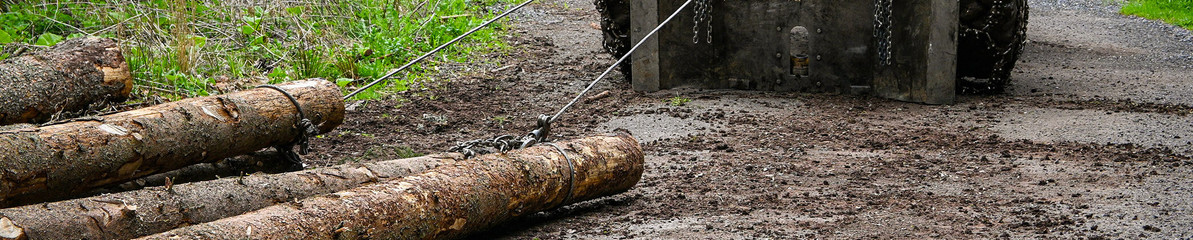
Logging chokers are one of the most recognizable pieces of forestry rigging. They wrap around or connect to a log so it can be pulled, skidded, or repositioned by a winch, skidder, or other equipment.
Common options include wire rope logging chokers and chain logging chokers. Wire rope chokers are widely used in logging and timber operations because they are flexible, durable, and available in multiple configurations. Chain chokers are another strong option for crews that prefer chain-based systems, especially where field repair, abrasion resistance, or specific regional preferences matter.
Shop Logging Chokers
Browse wire rope and chain chokers built for professional logging, skidding, and timber-handling applications. This is the best starting point if your crew needs durable chokers for moving logs in real field conditions.
Browse Logging ChokersHow to Choose a Logging Choker
- Match the choker style to the equipment and connection method being used.
- Consider the size, weight, and shape of the timber being moved.
- Choose hardware that is compatible with your winch line, hook, shackle, or connection point.
- Inspect for broken wires, bent hooks, worn chain links, damaged ferrules, or other signs of wear before use.
- Never use a logging choker for overhead lifting unless it is specifically designed, rated, and approved for that application.
2. Winch Lines for Pulling Power
Winch lines provide the pulling force needed for many logging, recovery, and heavy-equipment applications. In forestry work, they may be used to pull logs, reposition equipment, recover vehicles, or support controlled line setups.
Steel winch lines are known for toughness, abrasion resistance, and long service life in rugged environments. Synthetic winch lines can offer easier handling and reduced weight, depending on the application. The best choice depends on the equipment, terrain, abrasion exposure, line length, and type of pulling work being performed.
Shop Winch Lines
Find steel, synthetic, and high-performance winch line options for demanding pulling, recovery, and heavy-equipment applications. This category is ideal for crews comparing cable strength, handling, durability, and application requirements.
Browse Winch LinesRelated Guide
Need help comparing synthetic rope and steel cable for winching? Read Bishop Lifting’s guide to choosing the right winch line material for your application.
Read: What Is Better for a Winch, Rope or Cable?3. Logging Blocks for Line Control and Redirects
Logging blocks, also known as logging pulleys or yarding blocks, help redirect a line, improve pulling angles, and reduce strain on equipment. In forestry work, a well-planned block setup can make a difficult pull more controlled and efficient.
Blocks are especially useful when a straight-line pull is not practical, when an anchor point needs to be used, or when the operator needs better control over the direction of force. Choosing the right block means matching the line size, working load, connection type, and job conditions.
Shop Logging Blocks
Explore logging blocks and pulleys designed for professional forestry, yarding, rigging, and heavy-pulling applications. These products help crews manage line direction, improve pulling geometry, and handle demanding field setups.
Browse Logging BlocksRelated Guide
For more information on using blocks in pulling and rigging setups, review Bishop Lifting’s step-by-step snatch block safety guide.
Read: How to Use a Snatch Block Safely4. Forestry Shackles for Rugged Logging Connections
Forestry shackles are used as connection points in logging, skidding, and pulling setups. They help connect lines, chokers, blocks, and other compatible hardware in rugged field environments.
Because logging work can involve shock loading, harsh terrain, abrasion, and repeated field use, shackle selection matters. Crews should pay attention to the shackle type, pin style, working load limit, fit, and the application the shackle is rated for.
Shop Forestry Shackles
Browse forestry shackles made for logging, timber, pulling, and skidding applications. This category is a strong fit for crews that need rugged connection hardware for demanding forestry environments.
Browse Forestry ShacklesRelated Guide
If you are comparing different shackle types, this guide explains common shackle styles and how to choose the right option based on load, pin type, and application.
Read: The 3 Main Types of Shackles5. Hooks and Rigging Hardware
Hooks are used throughout logging, rigging, pulling, and load-control work. Depending on the job, a crew may use grab hooks, sling hooks, clevis hooks, eye hooks, transport hooks, or specialty hooks. The right hook depends on the connection style, load direction, hardware compatibility, and whether the application involves pulling, lifting, towing, or cargo control.
In logging environments, the most important rule is compatibility. A hook should match the chain, wire rope, sling, shackle, or attachment point being used. A poor fit can create side loading, point loading, or unintended movement during the job.
Shop Rigging Hooks
Find hooks for chain slings, wire rope slings, cargo control, rigging, towing, and general load-handling applications. This category is useful when replacing worn hooks or building compatible rigging assemblies.
Browse Rigging Hooks6. Load Securement Gear for Transport
Once timber, equipment, or supplies are ready to move, load securement becomes a critical part of the job. Chains, binders, straps, hooks, and related cargo-control hardware help reduce load shifting during transport.
For logging and forestry crews, securement gear should be selected based on the weight of the load, trailer type, tie-down points, road conditions, and applicable transport requirements. Worn chain, damaged hooks, bent binders, frayed straps, or unreadable tags should be addressed before the equipment is used.
Shop Load Securement
Browse chains, binders, straps, hooks, and cargo-control accessories for securing equipment, timber, and heavy loads during transport. This category helps crews find the right tie-down gear for safer, more reliable hauling.
Browse Load Securement GearRelated Guide
Not sure which binder style is right for your load? Compare ratchet binders and lever binders before you buy.
Read: Ratchet vs. Lever Chain Binders7. Complete Logging Supplies for Professional Crews
Many logging operations need more than one product category. A crew may use chokers for skidding, blocks for line direction, shackles for connections, winch lines for pulling, and load securement gear for transport. Buying from a supplier that understands logging, lifting, rigging, and cargo control can make it easier to build a complete setup.
Shop Logging Supplies
Start here for a broader selection of logging supplies, including chokers, logging blocks, logging tools, Ulven logging hardware, drumline cables, log truck wrappers, skidder chains, and related forestry gear.
Browse Logging SuppliesRelated Guide
For a broader look at forestry gear, read Bishop Lifting’s guide to the equipment used in logging operations.
Read: Essential Equipment Used in LoggingHow to Choose the Right Logging Equipment
The right logging equipment depends on the job, terrain, timber size, pulling angle, equipment being used, and the type of connection required. Before buying, consider the following factors:
Selection Checklist
- Application: Are you skidding, pulling, redirecting a line, lifting, towing, or securing a load?
- Rating: Does the equipment have the correct working load limit or breaking strength for the job?
- Compatibility: Do the choker, hook, line, block, shackle, and connection point fit together correctly?
- Environment: Will the gear be exposed to mud, abrasion, sharp edges, moisture, corrosion, or extreme terrain?
- Inspection: Can the crew easily inspect the product before each use?
- Compliance: Does the product match the intended use and applicable safety requirements?
Inspection and Maintenance Tips
Logging tools work in tough environments, so inspection and maintenance should be part of the routine. Damaged or questionable equipment should be removed from service until it can be evaluated, repaired, or replaced.
- Inspect wire rope for broken wires, kinks, crushing, corrosion, birdcaging, or damaged end fittings.
- Inspect chain for stretched, bent, cracked, gouged, or worn links.
- Inspect hooks for throat opening, cracks, twists, latch damage, or deformation.
- Inspect shackles for bent pins, worn threads, body distortion, cracks, or illegible markings.
- Inspect blocks for sheave wear, side plate damage, pin condition, bearing function, and proper line fit.
- Store gear properly when possible to reduce corrosion, contamination, and unnecessary damage.
Need Help Matching Gear to the Job?
Logging, skidding, pulling, lifting, and transport applications all require the right equipment for the task. If you are replacing a worn part, building a new setup, or comparing product options, Bishop Lifting can help you find compatible gear for your application.
Shop Logging SuppliesFrequently Asked Questions About Logging Tools
What tools are commonly used for logging?
Common logging tools include logging chokers, winch lines, logging blocks, forestry shackles, hooks, rigging hardware, and load securement equipment. Depending on the job, crews may also use saws, wedges, axes, protective gear, and equipment-specific accessories.
What is a logging choker used for?
A logging choker is used to grip or connect to a log so it can be pulled, skidded, or repositioned. Logging chokers are commonly made from wire rope or chain and should be selected based on the equipment, timber size, terrain, and intended use.
Are logging chokers used for overhead lifting?
No. Logging chokers are generally intended for logging, skidding, and pulling applications, not overhead lifting. If the job involves overhead lifting, use lifting slings or rigging products specifically designed, rated, and approved for overhead lifting.
Why are logging blocks used?
Logging blocks help redirect a line, improve pulling angles, and reduce strain on equipment. They are useful when a straight pull is not practical or when a crew needs more control over the direction of force.
What is the difference between a forestry shackle and a standard rigging shackle?
Forestry shackles are designed for rugged logging, pulling, and skidding environments. Standard rigging shackles may be designed for different lifting or rigging applications. Always confirm the product rating, intended use, and manufacturer instructions before using any shackle.
How often should logging gear be inspected?
Logging gear should be inspected before use and removed from service if damage, deformation, excessive wear, missing markings, or other safety concerns are found. Harsh environments may require more frequent inspection and replacement.
Build a Better Logging Setup with Bishop Lifting
From logging chokers and winch lines to forestry shackles, blocks, hooks, and load securement gear, Bishop Lifting offers equipment for professional crews working in demanding forestry and rigging environments.
What Is an Anchor Shackle?
May 7th 2026

What Is the Best Sling for Lifting?
May 1st 2026
Who Has the Largest Vertical Testbed in the Rigging Industry?
Apr 27th 2026
What Is Lifting and Rigging Equipment?
Apr 27th 2026
What are Self-Retracting Lifelines?
Apr 23rd 2026
What Are the Benefits of Using an Electric Chain Hoist?
Apr 17th 2026

What Are the Different Types of Slings for Rigging?
Apr 13th 2026
What Are the Two Types of Lifting Beams?
Apr 9th 2026
What Is an Eye Bolt Used For?
Apr 3rd 2026