
BLP
1/2" x 15 ft Type DOG 2-Leg Grade 100 Chain Sling - 26000 lbs WLL


This product is rated for overhead lifting.

This product is not returnable.

Earn Rewards with Loyal Lifter's Club

CA Prop 65



Product Description
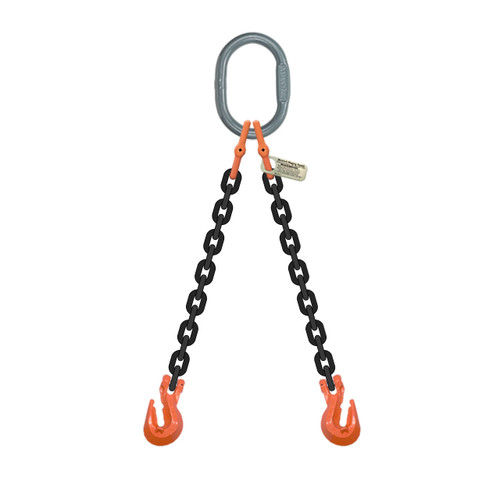
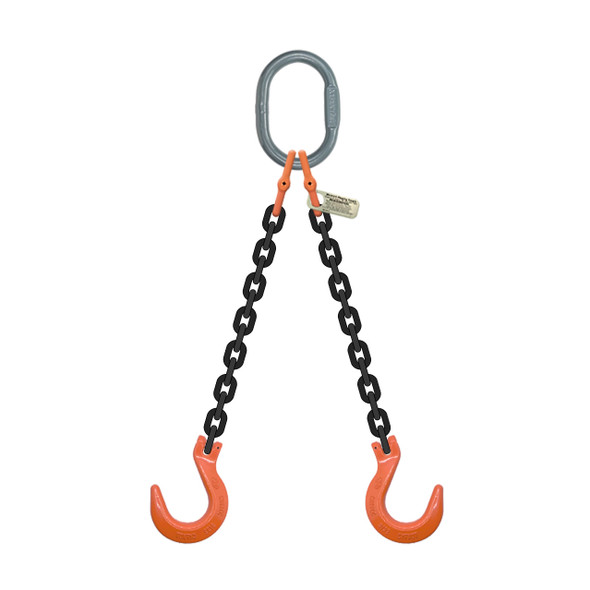
DOG Grade 100 Chain Sling – Double Leg with Master Link & Grab Hooks
The DOG Grade 100 Chain Sling is a rugged double-leg lifting sling manufactured from premium Grade 100 alloy chain and fittings. This configuration features an oblong master link on one end with clevis grab hooks on each leg, offering adjustability and secure load engagement for a wide range of lifting applications.
We offer online purchase sizes from 7/32" through 3/4", with Working Load Limits ranging from 4,700 lbs up to 61,100 lbs (at 60° or less). Larger chain diameters and higher capacities are available on a per-quote basis for engineered and high-capacity lifting applications.
- Made from Grade 100 alloy chain and fittings – new and certified
- Double-leg DOG configuration with oblong master link
- Clevis grab hooks on each leg for adjustable length control
- Ideal for two-point lifting and improved load stability
- Individually serialized and furnished with metal load tag
- Load tag indicates chain size, sling length, Working Load Limit, and serial number
- Designed for demanding industrial and construction environments
Why Choose DOG Grade 100 Chain Slings?
The DOG configuration provides the stability of a double-leg sling with the added flexibility of grab hooks. This allows operators to shorten chain legs quickly and balance uneven loads without additional hardware. It is a practical and economical choice for many structural and industrial lifting scenarios.
Grade 100 alloy chain delivers approximately 25% higher Working Load Limits compared to Grade 80 chain of the same diameter — allowing increased lifting capacity without increasing sling weight.
Typical Applications
- Structural steel erection
- Equipment and machinery lifting
- Fabrication and manufacturing operations
- Precast and industrial component handling
- General two-point overhead lifts
Frequently Asked Questions
What does “DOG” mean?
DOG denotes a double-leg chain sling with grab hooks on each leg and an oblong master link at the top.
When should I choose grab hooks over sling hooks?
Grab hooks are ideal when you need to shorten chain length or adjust sling legs to balance uneven loads.
How does sling angle affect capacity?
Working Load Limits are based on a 60° sling angle. As the sling angle decreases (becomes flatter), tension on each leg increases and overall Working Load Limit is reduced. Always follow proper rigging angle charts and lifting standards.
Are these slings certified?
Yes. Each DOG chain sling is supplied with a metal load tag showing chain size, sling length, Working Load Limit, and a unique serial number for traceability.
Important Safety Information
- Use only by trained and qualified personnel.
- Never exceed the Working Load Limit.
- Observe proper sling angle limitations — Working Load Limits decrease as sling angles become flatter (below 60°).
- Inspect chain, master link, and grab hooks before each use.
- Remove from service if damage, deformation, or overloading is suspected.
Need a custom double-leg sling assembly or engineered lifting configuration? Contact us for tailored lifting solutions built to your specifications.
Specifications
Related Items
Related Products

BLP
1/2" x 20 ft Type DOG 2-Leg Grade 100 Chain Sling - 26000 lbs WLL
BLP
1/2" x 10 ft Type DOG 2-Leg Grade 100 Chain Sling - 26000 lbs WLL

BLP
1/2" x 5 ft Type DOG 2-Leg Grade 100 Chain Sling - 26000 lbs WLL
BLP
1/2" x 15 ft Type DOF 2-Leg Grade 100 Chain Sling - 26000 lbs WLL

BLP
1/2" x 15 ft Type DOS 2-Leg Grade 100 Chain Sling - 26000 lbs WLL
Safety Notice
Although Bishop Lifting strives to manufacture and sell the highest quality rigging and safety gear, use of the gear is dangerous if not used correctly by competent trained professionals. Bishop Lifting disclaims any liability resulting from the misuse of its rigging and safety gear. Please take a moment to more thoroughly review our disclaimer.
Bishop Lifting rigging and safety gear is only intended to be used by competent trained professionals. Misuse of the rigging and safety gear can result in serious injury up to and including loss of life. As such, Bishop Lifting disclaims liability for any misuse or incorrect product selection by our customers.
Rigging and safety gear purchased from Bishop Lifting should be used in strict accordance with all industry and OSHA standards. At no time should rigging or safety gear be used beyond its certified load ratings (aka Working Load Limits). Normal wear and tear should be expected with use of rigging and safety gear; therefore, all gear should be thoroughly inspected before each and every use. Worn or unsafe rigging and safety gear should never be used.