

What Is an Eye Bolt Used For?
Eye bolts are used to create a secure attachment point for lifting, rigging, anchoring, and positioning loads. The right eye bolt depends on the load direction, working load limit, installation method, and environment.
Quick answer
Eye bolts are commonly used as attachment points for overhead lifting, rigging assemblies, anchors, and pull points. In lifting applications, they are often installed in machinery, fabricated components, or structural points so hooks, shackles, or slings can be connected safely.
- Vertical lifting of equipment and components
- Angled lifting when a shouldered design is appropriate
- Anchoring and tie-off points in rigging setups
- Positioning, pulling, or securing industrial loads
What does an eye bolt do?
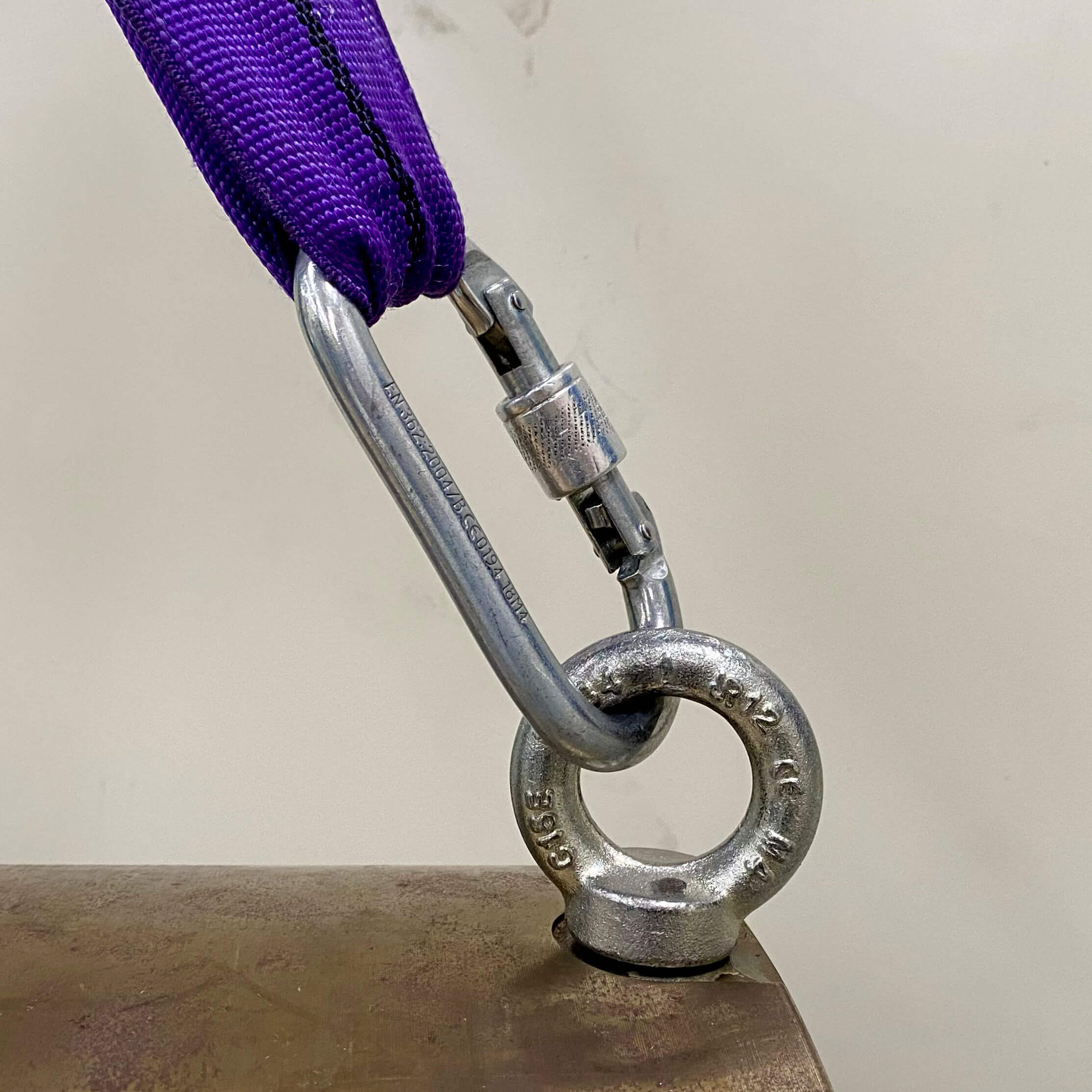
An eye bolt provides a load connection point. The eye allows rigging hardware such as hooks, shackles, or slings to attach to a load or structure. In practice, eye bolts are used when you need a defined and rated attachment point rather than wrapping a sling directly around a component.
They are widely used in construction, equipment handling, manufacturing, marine environments, and maintenance work because they simplify load attachment and help create more repeatable lifting setups.
Common uses for eye bolts
1. Lifting equipment and machinery
Eye bolts are often installed in motors, pumps, fabricated assemblies, and industrial equipment to create a lifting point for hoists, slings, or hooks.
2. Rigging and assembly work
In rigging, eye bolts are used as connection points within a larger system that may also include shackles, hooks, chain, and slings.
3. Anchoring and pull points
Some eye bolts are used as fixed attachment points for tensioning, pulling, or stabilizing equipment where the load path is well understood.
4. Corrosion-resistant applications
In wet or corrosive environments, buyers may choose finishes or materials better suited to the conditions rather than using a general-purpose eye bolt.
Types of eye bolts and when to use them
Lifting.com’s eye bolt category includes machinery eye bolts, shoulder eye bolts, and regular eye bolts. Their category guidance also notes that machinery and shoulder eye bolts can handle angular loads with reduced WLL, while regular eye bolts are intended for vertical or in-line loading only. :contentReference[oaicite:2]{index=2}
| Type of Eye Bolt | Best Use | Key Note |
|---|---|---|
| Machinery Eye Bolt | Lifting machinery and industrial components | Shouldered design supports vertical lifting and some angular loading when properly installed |
| Shoulder Eye Bolt | Angled or multi-directional lifting setups | Shoulder must seat properly; WLL drops as lift angle increases |
| Regular Eye Bolt | Straight-line or vertical loading only | Not for angular or side loading |
How to choose the right eye bolt
- Define the load direction. Vertical loading and angular loading are not the same. This is one of the first decisions in eye bolt selection.
- Check the working load limit. Use only properly rated hardware for the application and never assume a similar-looking part is equivalent.
- Match the bolt to the installation point. Thread type, length, base material, and seating all affect performance.
- Consider the environment. Outdoor, wet, or corrosive conditions may call for different finishes or materials.
- Build the entire rigging path correctly. Eye bolts are only one part of the system. Shackles, hooks, and slings must also be selected correctly.
Real-world selection examples
- Lifting a motor straight up: a machinery or shouldered eye bolt may be appropriate when properly rated and installed.
- Lifting at an angle: use a shouldered design that is intended for that kind of loading, and account for reduced WLL.
- Simple in-line attachment point: a regular eye bolt may be suitable if the load is truly straight-line only.
- Complex or off-center lifting: a hoist ring or dedicated lifting point may be safer than a standard eye bolt. Lifting.com’s eye bolt guidance specifically recommends hoist rings or hybrid lifting points for frequent off-center or multi-directional lifts. :contentReference[oaicite:3]{index=3}
Common mistakes to avoid
- Using a regular eye bolt for angular loading
- Ignoring reduced WLL at lift angles
- Installing a shouldered eye bolt without seating the shoulder properly
- Mixing in unrated connectors elsewhere in the rigging assembly
- Treating the eye bolt as the only component that matters in the lift
Shop related equipment on Lifting.com
These live Lifting.com pages create a stronger buying path and help readers move from education to equipment selection. :contentReference[oaicite:4]{index=4}
Eye Bolts
Start here for machinery eye bolts, shoulder eye bolts, and regular eye bolts. This is the best category page for buyers comparing eye bolt types and load direction requirements.
Rigging Hardware
Use this category if you are building out the full connection path. Lifting.com positions rigging hardware as the backbone of safe lifting and load handling and includes shackles, hooks, turnbuckles, fittings, and lifting points. :contentReference[oaicite:5]{index=5}
Shackles
Shackles are a common companion product when connecting slings, hooks, and eye bolts. This category helps readers choose a proper connector instead of improvising with general hardware.
Rigging Hooks
Hooks are another frequent part of the load path. Lifting.com carries rigging hooks for chain slings, wire rope slings, cargo control, and general lifting applications. :contentReference[oaicite:6]{index=6}
Understanding Eye Bolts
This supporting blog post helps reinforce when an eye bolt is or is not the best lifting point. It is especially helpful if your audience may need alternatives like hoist rings in more complex lifts. :contentReference[oaicite:7]{index=7}
What Is Considered Rigging Hardware?
This article expands the context around eye bolts by placing them inside the broader category of rigging hardware, alongside shackles, hooks, and turnbuckles. :contentReference[oaicite:8]{index=8}
Frequently asked questions
What is an eye bolt used for in lifting?
In lifting, an eye bolt is used as a rated attachment point for connecting hooks, shackles, or slings to a load. It helps create a defined connection rather than relying on an improvised attachment point.
Can eye bolts be used for angled lifts?
Some can. Lifting.com notes that machinery and shoulder eye bolts can be used for angular loading, but their WLL decreases as the lift angle increases. Regular eye bolts are intended for in-line vertical loading only. :contentReference[oaicite:9]{index=9}
What is the difference between a regular eye bolt and a shouldered eye bolt?
A regular eye bolt is generally for straight-line loading. A shouldered eye bolt has a reinforced shoulder that helps support angular loading when installed correctly, though capacity still drops as angle increases. :contentReference[oaicite:10]{index=10}
Are eye bolts enough by themselves for a rigging setup?
No. Eye bolts are only one part of the rigging path. You also need the correct connectors and rigging hardware, such as shackles, hooks, or slings, all selected for the application. :contentReference[oaicite:11]{index=11}
When should I use a hoist ring instead of an eye bolt?
For frequent off-center, angled, or multi-directional lifts, Lifting.com recommends a hoist ring or hybrid lifting point as a safer alternative to a traditional eye bolt. :contentReference[oaicite:12]{index=12}
Need the right eye bolt for your application?
Shop eye bolts, shackles, hooks, and complete rigging hardware systems built for professional lifting and load-handling applications.
What Is an Eye Bolt Used For?
Apr 3rd 2026
How to Determine Chain Binder Size
Mar 30th 2026

Is a Safety Harness Considered Fall Protection?
Mar 16th 2026
What Is the Difference Between a Gantry Crane and a Davit Crane?
Mar 13th 2026

Do Lifting Chains Need to Be Certified?
Mar 10th 2026

What Type of Chain Is Used for Overhead Lifting?
Mar 6th 2026
Essential Equipment Used in Logging (The Gear That Actually Moves Wood)
Mar 4th 2026

Ratchet vs. Lever Chain Binders: Which Is Better for Your Load?
Mar 2nd 2026
Lifting vs. Rigging Equipment: What’s the Difference (and What You Actually Need)?
Feb 24th 2026