Rigging Hardware Education • Tensioning • Best Practices
A turnbuckle is a precision tensioning component used to tighten, loosen, and fine-tune wire rope, cable, rod, or similar assemblies in a straight-line pull. In professional rigging, turnbuckles help you dial in alignment, remove slack, and maintain consistent tension—when selected and used correctly.
Safety Note (Read Before You Use a Turnbuckle)
Turnbuckles are widely used for tensioning and load securement, but not every turnbuckle is intended for overhead lifting. Always confirm the manufacturer’s ratings/markings and follow your site’s lift plan, inspection criteria, and applicable standards. When in doubt, choose load-rated rigging hardware and consult a qualified person.
What a Turnbuckle Does (In Plain Terms)
A turnbuckle changes the effective length of an assembly. By rotating the body, the end fittings draw together or spread apart, allowing you to increase or decrease tension without re-terminating the line.
Where that matters most:
Alignment & Stability
Remove slack and fine-tune straight-line pulls for more stable assemblies.
Tension Control
Dial in consistent tension in cables/rods so the system performs as designed.
Adjustability Over Time
Make periodic tension corrections as loads settle, temperatures change, or components “bed in.”
Basic Turnbuckle Components
Most turnbuckles include a central body and two threaded end fittings—one right-hand thread and one left-hand thread— so turning the body adjusts tension efficiently.
Body
The barrel you rotate to change effective length and tension.
End Fittings
Common styles include jaw and eye. Your attachment method drives the best choice.
Thread Engagement
Adequate thread engagement is critical—avoid running either end too far out of the body.
Turnbuckle Types (And When to Use Each)
Lifting.com stocks turnbuckles in the three most common configurations—chosen based on how you need to connect into the assembly: Jaw & Jaw, Jaw & Eye, and Eye & Eye.
Shop Category
Turnbuckles
Need adjustable tensioning you can fine-tune on site? This category includes turnbuckles for rigging and load securement in multiple end-fittings and finishes, making it easier to match your connection style and environment.
Jaw & Jaw Turnbuckles
Best for secure, pin-connected attachments (clevis-style connections) where you want positive retention and a clean in-line pull.
Category Intro (Conversion Block)
If you’re building a semi-permanent tensioning assembly, jaw-to-jaw connections reduce “open hook” risk and help keep hardware aligned. Shop jaw & jaw turnbuckles for reliable clevis-style connections.
Shop Jaw & Jaw Turnbuckles
Jaw & Eye Turnbuckles
A versatile hybrid when one end needs a pin connection and the other needs an eye attachment (often used with shackles or eye bolts).
Category Intro (Conversion Block)
Jaw & eye turnbuckles help you adapt to mixed connection points without redesigning the whole assembly. If your rig has a clevis/pin on one end and an eye-style connection on the other, this is often the cleanest fit.
Shop Jaw & Eye Turnbuckles
Eye & Eye Turnbuckles
Common where both ends need looped attachment points—often paired with shackles, links, or other connectors.
Category Intro (Conversion Block)
Eye-to-eye turnbuckles are a go-to choice when you want simple compatibility across common connectors. If your system uses shackles or link-style connections at both ends, eye & eye keeps selection straightforward.
Shop Eye & Eye Turnbuckles
Common Rigging Applications
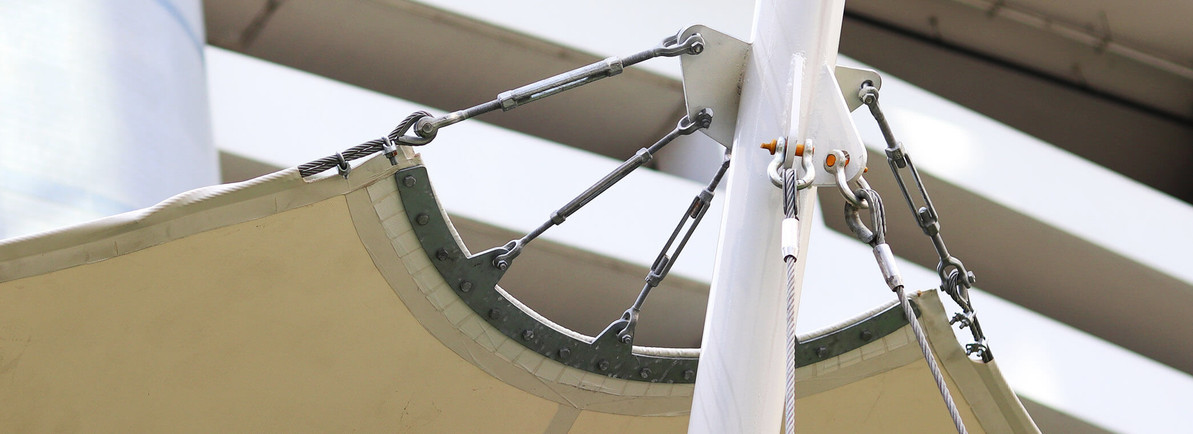
Turnbuckles show up anywhere you need a controlled, adjustable straight-line pull—especially in systems that must stay aligned and tensioned over time.
- Structural bracing & alignment: tightening diagonal bracing or tension members to keep assemblies true.
- Load securement & industrial tensioning: controlling slack in securement assemblies (within rating and application guidance).
- Marine and outdoor assemblies: corrosion-resistant finishes are often favored for wet or harsh environments.
- General rigging systems: tensioning wire rope or rod systems where periodic adjustment is expected.
How to Choose the Right Turnbuckle
1) Match the End Fittings
Choose jaw, eye, or mixed based on your connection points—then confirm pin size/fit and articulation to avoid side-loading.
2) Confirm WLL & Markings
Select hardware with appropriate Working Load Limit (WLL) for the planned load and configuration. Never exceed rated capacity.
3) Choose Material for the Environment
Galvanized and stainless options are commonly used to improve corrosion resistance outdoors or in marine conditions.
Pro Tip: Build the System, Not Just the Turnbuckle
Many issues start at the connection point. Pair turnbuckles with compatible, load-rated connectors (like shackles) that fit correctly and won’t introduce twist, binding, or side-loading.
Recommended Companion Category
Shackles
Shackles are one of the most common connectors used with turnbuckles and eye-style attachments. When you need a removable, load-rated connection point, selecting the right shackle style and pin type can improve both safety and ease of assembly.
Shop Shackles
Great for eye connections and removable assemblies.
Best Practices for Installation & Use
- Keep pulls in-line: Turnbuckles are designed for straight-line tensioning. Minimize angles that can introduce side-loading.
- Maintain thread engagement: Don’t back either end fitting out too far—insufficient engagement reduces strength and stability.
- Use secure connections: Confirm pins, cotters, and fasteners are correct and properly installed for jaw-style connections.
- Lock it in when required: If vibration or movement is expected, use appropriate retention/locking methods per manufacturer guidance and your job plan.
- Inspect before and during use: Remove from service if you see bent components, damaged threads, cracks, heavy corrosion, or deformation.
Field Safety Reminder
Tensioning and lifting operations can create high-risk zones around the load and rigging path. Use clear communication, follow your lift plan, and keep unnecessary personnel away from the hazard area.
Read: The 10-Foot Rule for Rigging
Related Lifting.com Resources
Keep building your system knowledge with these related guides:
Build Your System
Rigging Hardware
Rigging systems are only as strong as their connection points. Browse load-rated rigging hardware to match your sling type, attachment method, and environment—so the entire assembly works together correctly.
Turnbuckles in Rigging: Quick FAQs
What’s the main purpose of a turnbuckle?
To adjust tension and effective length in a straight-line assembly by rotating the turnbuckle body.
Which end fitting should I choose: jaw or eye?
Choose based on the connection point. Jaw ends are commonly used with pins/clevis connections; eye ends commonly connect with shackles, links, or eye bolts. Use the category links above to match your configuration.
Can I use a turnbuckle for overhead lifting?
Only if the specific turnbuckle is designed and rated for that application and used in accordance with manufacturer guidance and your lift plan. If you’re unsure, consult a qualified person and select load-rated components for the entire assembly.
What’s the biggest mistake people make with turnbuckles?
Misapplication—especially off-axis loading, inadequate thread engagement, or pairing the turnbuckle with incompatible connectors that create twist, binding, or side-load.
Ready to spec the right turnbuckle?
Shop turnbuckles by end fitting and build a safer, more reliable rigging assembly with compatible connectors.
Note: Always follow your company procedures, lift plan, and manufacturer guidance. Inspect rigging hardware before use and remove damaged components from service.